Holistic Mind Empowerment Programme: A Journey Towards Mindfulness, Clarity & Personal Growth
We invest years developing our academic knowledge and professional skills.
But how much time do we spend understanding our own mind?
Our thoughts influence our choices. Our habits influence our actions. Our emotional responses affect our relationships. And our ability to remain focused, disciplined, and consistent can significantly influence the direction of our lives.
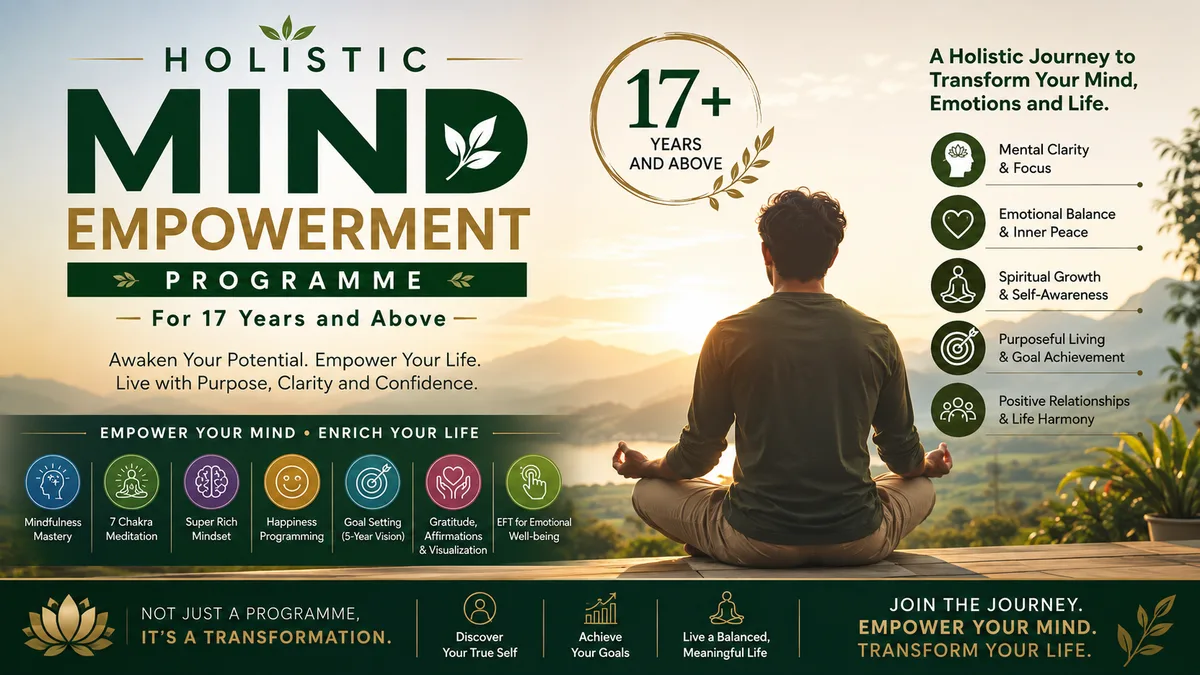
The Holistic Mind Empowerment Programme is designed for individuals aged 17 years and above who want to explore personal development beyond conventional academic or professional learning.
At Rajyog Agnihotra Global Foundation, the programme brings together mindfulness, meditation, self-reflection, goal setting, visualization, emotional awareness, gratitude, positive mindset practices, and conscious living within a structured developmental experience.
What Is Holistic Mind Empowerment?
Holistic Mind Empowerment is an approach to personal development that considers multiple dimensions of an individual's life rather than focusing on one skill alone.
The programme encourages participants to explore areas such as:
Mindfulness
Meditation
Self-awareness
Emotional awareness
Goal setting
Visualization
Positive mindset
Gratitude
Consistency
Personal discipline
Confidence
Conscious decision-making
Spiritual awareness
Personal growth
The objective is not to promise instant transformation.
Instead, participants are introduced to practical concepts and reflective exercises they can gradually incorporate into everyday life.
Who Is This Programme For?
The Holistic Mind Empowerment Programme is designed for individuals aged 17 years and above.
It may be explored by:
Students • Competitive Exam Aspirants • College Students • Working Professionals • Entrepreneurs • Business Owners • Homemakers • Teachers • Parents • Individuals Seeking Personal Growth
For students preparing for demanding examinations such as 11th and 12th standard examinations, JEE, NEET, NDA, MPSC, UPSC, and other competitive examinations, concepts such as mindfulness, disciplined routines, goal clarity, and stress-management practices may complement their regular academic preparation.
The programme does not replace academic coaching. Instead, it focuses on the individual behind the preparation.
Why Does Mind Empowerment Matter?
Knowledge alone does not always determine results.
A person may know exactly what needs to be done but still struggle with:
Procrastination
Lack of consistency
Distraction
Self-doubt
Unclear goals
Poor routines
Emotional pressure
Fear of failure
Overthinking
Difficulty staying focused
This is why personal development involves more than acquiring information.
It also involves becoming aware of our thoughts, behaviours, emotions, habits, and responses.
Key Areas of the Holistic Mind Empowerment Programme
1. Mindfulness Mastery
Mindfulness is the practice of intentionally bringing attention to the present moment.
In everyday life, our body may be performing one activity while our mind is occupied with something completely different.
Mindfulness exercises encourage participants to become more aware of their thoughts, emotions, surroundings, and actions.
This awareness can provide a foundation for more conscious responses and decisions.
2. Meditation Techniques
Meditation forms an important component of many holistic wellness traditions.
Participants may be introduced to different meditation and relaxation techniques designed to encourage moments of stillness, focused attention, and self-observation.
Meditation should be viewed as a complementary wellness practice rather than a replacement for professional medical or psychological care.
3. Goal Setting
A goal becomes more useful when it is clearly defined.
Participants are encouraged to think beyond vague statements such as:
“I want to become successful.”
Instead, they explore questions such as:
What do I actually want?
Why is it important to me?
What actions will be required?
What habits need to change?
What obstacles should I prepare for?
What can I begin doing today?
This approach can help transform aspirations into actionable direction.
4. Creating a Long-Term Vision
Short-term decisions often become easier when we understand our longer-term direction.
Participants may be encouraged to develop a broader vision covering areas such as:
Education
Career
Financial goals
Relationships
Family
Health and wellness
Personal development
Contribution to society
Spiritual growth
The purpose is not to predict the future but to think intentionally about it.
5. Visualization
Visualization involves mentally rehearsing a desired action, situation, or outcome.
It is used in various contexts, including sports, performance preparation, and personal development.
Within the programme, visualization may be used alongside practical planning and action.
Visualization alone does not guarantee an outcome.
The essential connection is:
Vision + Planning + Action + Consistency
6. Positive Mindset
A positive mindset does not mean pretending that difficulties do not exist.
Real challenges require real solutions.
Instead, participants explore how their interpretation of challenges can influence their responses.
A constructive mindset asks:
“What can I do next?”
rather than remaining focused only on:
“Why did this happen to me?”
7. Emotional Awareness
Emotions are part of being human.
The objective should not be to eliminate difficult emotions.
Instead, greater emotional awareness can help individuals recognize what they are feeling and consider how they want to respond.
Participants may reflect on areas such as:
Stress
Anger
Fear
Frustration
Self-doubt
Expectations
Relationships
Communication
Where persistent or severe emotional difficulties exist, appropriate professional mental-health support should always be considered.
8. Gratitude Practice
Gratitude involves intentionally recognizing positive aspects of life that can otherwise become easy to overlook.
A gratitude practice may involve reflecting on:
People
Opportunities
Experiences
Learning
Relationships
Everyday comforts
Personal progress
It does not mean ignoring genuine problems.
Rather, it creates space to acknowledge what is meaningful alongside life's challenges.
9. Consistency & Alignment of Actions
Many people have goals.
Fewer consistently take the actions required to move toward them.
One important aspect of mind empowerment is examining whether our everyday behaviour aligns with what we say we want.
If a student wants academic improvement, are their study habits aligned with that goal?
If a professional wants career growth, are they developing the necessary skills?
If someone wants greater peace, does their lifestyle create space for it?
Transformation requires more than intention.
Direction becomes meaningful when it is supported by consistent action.
10. Affirmations & Positive Self-Talk
The way we speak to ourselves can influence our motivation and behaviour.
Affirmations may be used as intentional statements that reinforce a chosen direction or mindset.
However, affirmations should remain realistic and be combined with action.
For example:
Instead of simply saying:
“I am successful.”
A more actionable approach might be:
“I am becoming more disciplined and consistently taking actions toward my goals.”
11. EFT & Complementary Wellness Practices
Participants may also be introduced to complementary practices such as Emotional Freedom Techniques (EFT).
Such methods should be understood as complementary wellness practices.
They should not be presented as treatments for medical or psychological conditions or as replacements for qualified healthcare.
12. Spiritual Awareness & Conscious Living
For participants interested in exploring the spiritual dimension of personal growth, the programme can introduce concepts related to self-reflection, gratitude, meditation, purpose, values, and conscious living.
Spiritual development does not have to mean withdrawing from everyday responsibilities.
It can also mean approaching everyday life with greater awareness, responsibility, compassion, and purpose.
Holistic Mind Empowerment for Students
Students today face challenges extending beyond their textbooks.
Academic competition, entrance examinations, career uncertainty, digital distractions, social comparison, family expectations, and fear of failure can all influence their experience.
The Holistic Mind Empowerment Programme can introduce students to concepts such as:
Goal Clarity • Mindfulness • Study Discipline • Visualization • Self-Awareness • Positive Self-Talk • Consistency • Emotional Awareness
These practices can complement—but should never replace—effective studying, qualified teaching, adequate sleep, physical activity, and professional support where needed.
Holistic Mind Empowerment for Professionals
Professional life brings a different set of challenges.
Deadlines.
Targets.
Leadership responsibilities.
Workplace relationships.
Financial responsibilities.
Constant digital communication.
Work-life balance.
Personal-development programmes can provide professionals with an opportunity to examine their routines, priorities, goals, communication, and overall approach to work and life.
From Motivation to Transformation
Motivation can be powerful.
But motivation naturally fluctuates.
That is why lasting personal development should not depend exclusively on feeling motivated every day.
A stronger framework is:
Awareness → Clarity → Goal → Plan → Action → Consistency → Review → Growth
A motivational session can make you feel inspired for a day.
A structured practice encourages you to develop habits that continue after the session has ended.
Holistic Development Is About Balance
Success is multidimensional.
Professional achievement is valuable.
So are meaningful relationships.
Financial stability matters.
So does emotional well-being.
Ambition matters.
So does inner peace.
The idea behind holistic development is not that every part of life will always be perfectly balanced.
It is about becoming conscious of the different dimensions that collectively influence our quality of life.
Our Approach at Rajyog Agnihotra Global Foundation
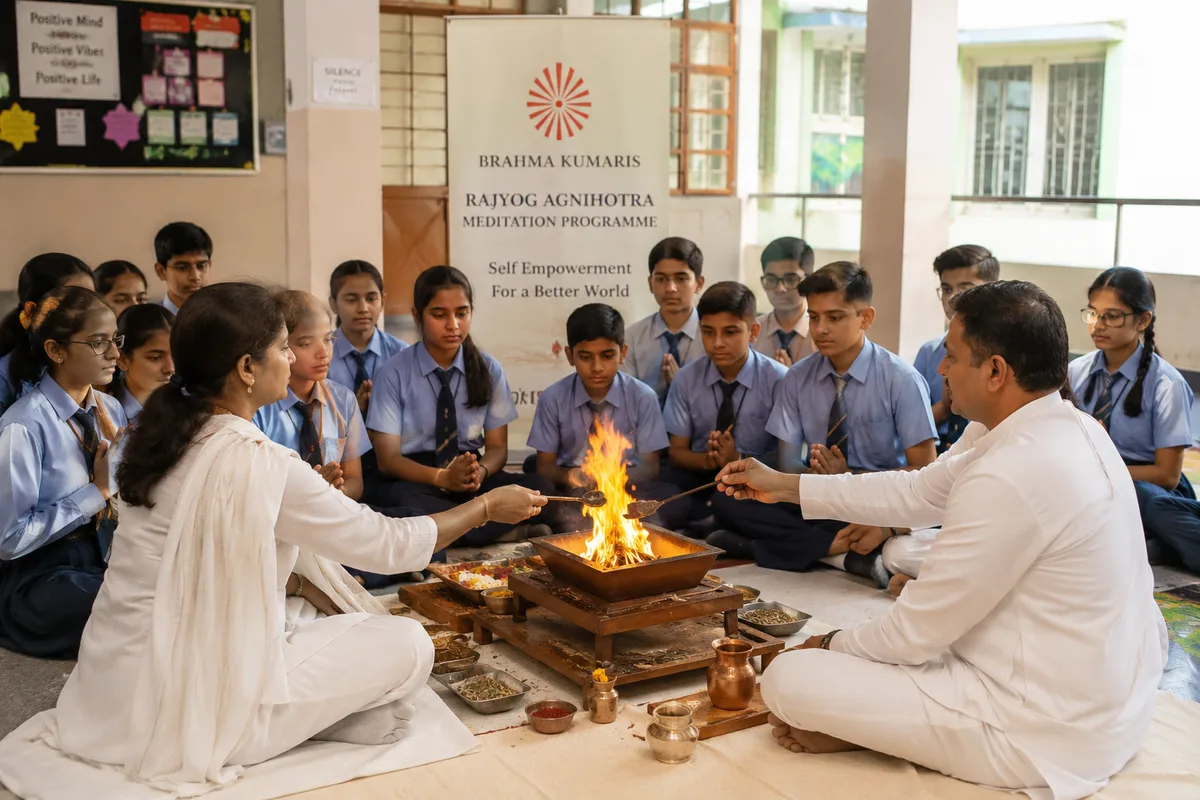
At Rajyog Agnihotra Global Foundation, we aim to make mindfulness, conscious living, traditional wisdom, and personal-development practices accessible in a structured and contemporary manner.
Our programmes bring together areas such as:
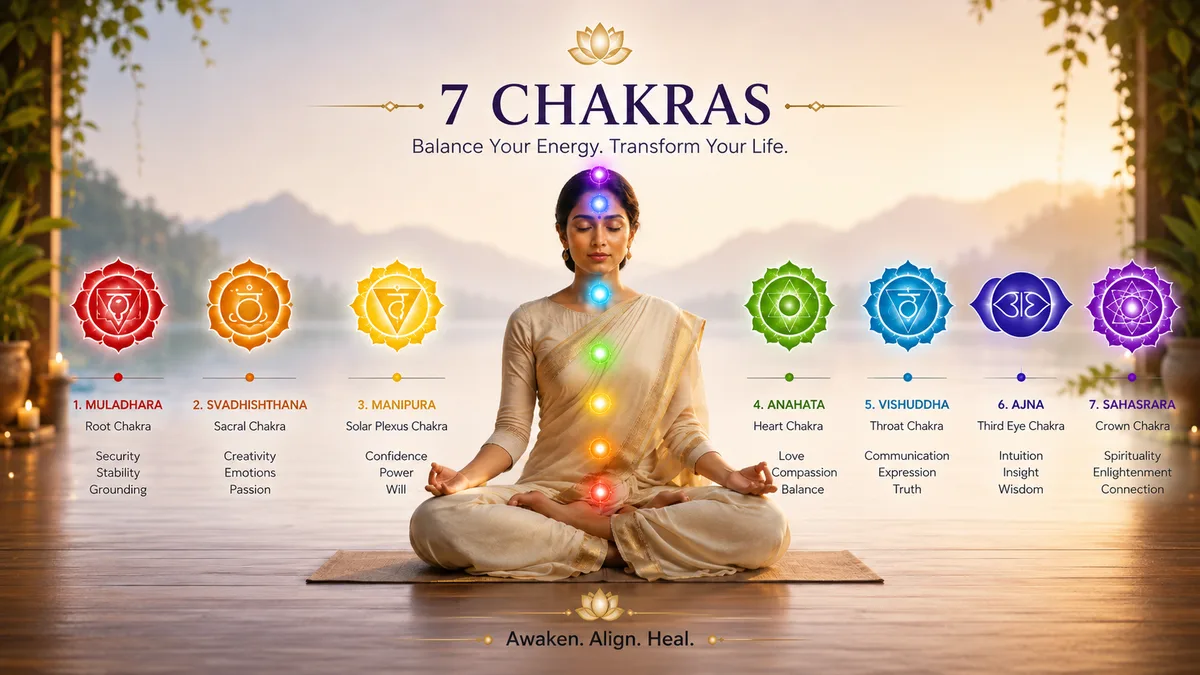
Mindfulness • Meditation • Agnihotra • Aura Awareness • Chakra Concepts • Goal Setting • Visualization • Gratitude • Personal Development • Conscious Living
Our larger objective is to encourage individuals to become more aware of their own potential, choices, responsibilities, and contribution to the world around them.
Your Mind Is Where Change Begins
You cannot control every situation.
You cannot control every person.
You cannot predict every outcome.
But you can become more conscious of your own thoughts, habits, decisions, actions, and responses.
That awareness can become the beginning of meaningful personal growth.
The Holistic Mind Empowerment Programme provides a structured environment to explore that journey.
If you are 17 years or above and interested in mindfulness, personal growth, meditation, mindset development, or conscious living, connect with Rajyog Agnihotra Global Foundation to learn more about upcoming programmes.
Empower Your Mind. Align Your Actions. Transform Your Life.
Visit: www.rajyogagnihotraglobal.org
Disclaimer: The Holistic Mind Empowerment Programme is an educational, personal-development, mindfulness, and complementary wellness programme. It is not intended to diagnose, treat, cure, or prevent medical or psychological conditions and should not replace professional medical, psychological, psychiatric, educational, financial, or other qualified advice. Individual experiences and outcomes may vary.